
Essex County Criminal History Checks
Start with the fact you need, not a broad name search. An allegation belongs with the police agency. Current county custody belongs with the Essex County Jail. A plea, dismissal, conviction, or sentence belongs with the court that handled the case. The New York State Unified Court System Criminal History Record Search, or CHRS, offers a statewide public name and date-of-birth report, but it is not a certified court file or a DCJS rap sheet. A person reviewing their own fingerprint-supported history should use DCJS Personal Record Review.
The Essex County government directory helps identify county offices before a request. Its official page is shown below.
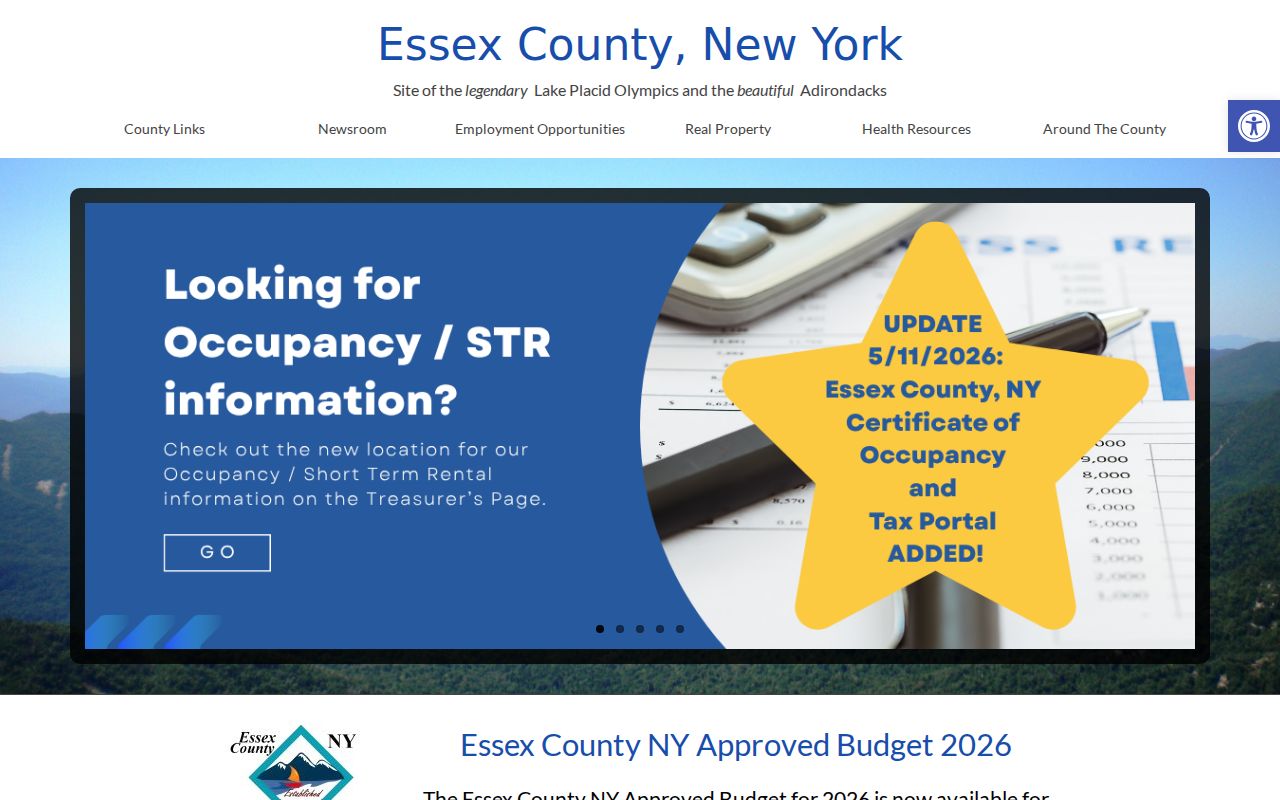
The directory is a routing tool, not a criminal-record database. Use it to confirm the current custodian and contact details.
- Identify the event location, agency, approximate date, and the exact record needed.
- Ask the originating police agency for incident or arrest material and the jail for custody facts.
- Contact the local Justice Court, or the Supreme and County Court clerk after a felony indictment.
- Use CHRS for a reported statewide public court match or DCJS fingerprints for your own rap sheet.
- Resolve conflicts with a court certificate, source-agency record, and a corrected DCJS review.
Essex Criminal Records Split
Essex County criminal records follow a three-point geography. Police departments and local Justice Courts start cases across eighteen towns and several villages. Court Street in Elizabethtown holds Supreme and County Court, the court clerk, County Clerk, District Attorney, and Probation. The Public Safety Facility in Lewis holds sheriff, booking, and county-custody functions. A trip to one point does not guarantee access to a record held at another.
The official Essex County Clerk page shows the public counter and seasonal schedule.
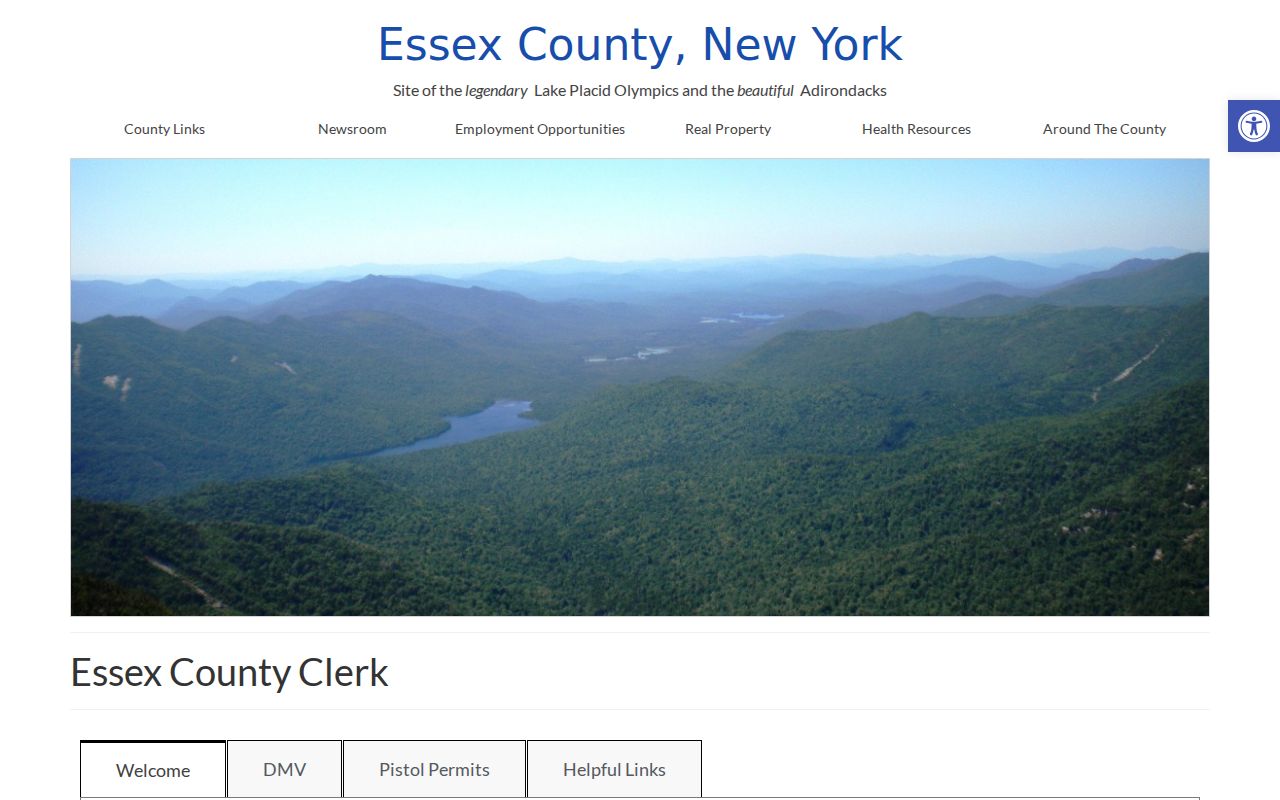
The linked IQS system is mainly for recorded documents. It must not be mistaken for an Essex County criminal-case portal.
Supreme and County Court
7559 Court Street
Elizabethtown, NY 12932
(518) 873-3370
EssexSupremeCo@nycourts.gov
Essex County Sheriff
702 Stowersville Road
Lewis, NY 12950
(518) 873-6970
sheriffcontact@essexcountyny.gov
Essex County Probation
7551 Court Street
Elizabethtown, NY 12932
(518) 873-3650
Official Background Checks in New York
The New York State Division of Criminal Justice Services, Office of Criminal Justice Records, is the central fingerprint repository. It does not offer a public name search for another person. DCJS Personal Record Review is for the subject or the subject's attorney. A suppressed review omits records hidden from ordinary civil disclosure. An unsuppressed review includes sealed and youthful-offender material so the subject can check whether the state record is complete.
Enrollment runs through IdentoGO by IDEMIA. Use service code 15464Z for a suppressed record or 15465F for an unsuppressed record. The IdentoGO enrollment screen provides current locations and charges.
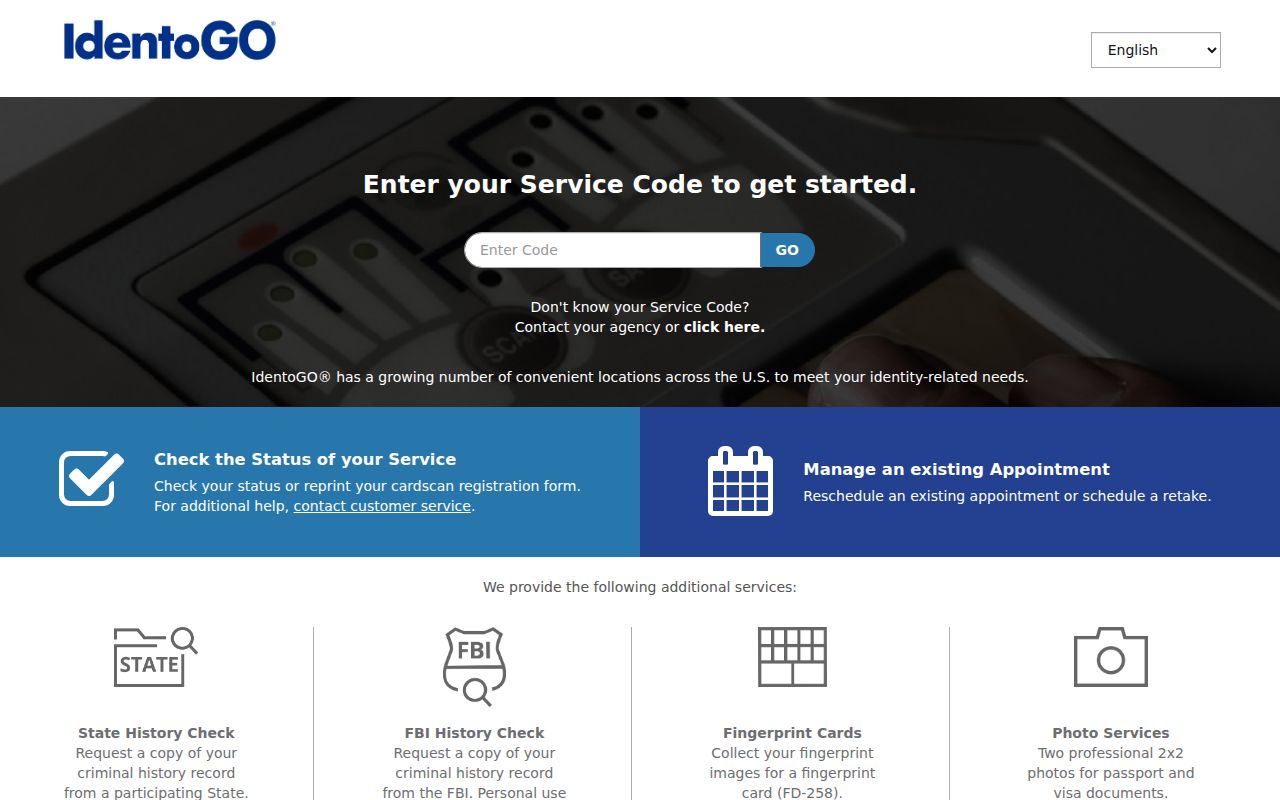
No verified enrollment site inside Essex County was documented, so enter a current county ZIP and confirm the site before travel. The FBI Identity History Summary is another subject-only fingerprint product and does not replace an Essex court file.
| Official product | Scope | Access | Known charge |
|---|---|---|---|
| DCJS Personal Record Review | Subject's New York fingerprint record | Subject or attorney, through IdentoGO | Current vendor fee or waiver |
| OCA CHRS | Reported public New York pending cases and convictions | Exact name and date of birth | $95 per combination |
| FBI Identity History Summary | Subject's FBI fingerprint record | Subject fingerprints | $18 FBI fee |
| Court certificate | One case's certified outcome | Originating court clerk | Ask the clerk |
Four Essex Criminal Record Layers
An arrest report describes what officers alleged and observed. A booking record tracks intake, custody, bail, release, and transfer. A court file shows the charges actually prosecuted and how the judge resolved them. A DCJS rap sheet links fingerprint-supported arrest cycles with reported prosecution, disposition, sentence, and supervision events. These records overlap, yet none is a substitute for all the others.
That distinction matters when a booking charge later changes. The filed information or indictment may reduce, replace, or add charges. A dismissal can then require sealing at the court and verification through DCJS. Treat the court disposition as the source for the case outcome and the jail as the source for admission or release dates.
- Disposition
- The court's recorded outcome, such as dismissal, plea, acquittal, or conviction.
- Certificate of disposition
- A court-certified statement of the case outcome.
- NYSID
- A state identifier tied to fingerprint-supported criminal-history events.
- Sealing
- A legal restriction on record visibility, not routine physical destruction.
Kinds of Criminal Records
Essex County criminal records are grouped by the office and stage that creates them. Police keep incident and arrest reports. The Lewis jail creates booking and custody files. Town and Village Justice Courts maintain lower-court dockets, while Supreme and County Court holds felony prosecutions after indictment. Judges issue warrants, Essex County Probation maintains local supervision files, and DOCCS holds state incarceration and parole information.
- Incident and arrest records: allegations, narrative, time, place, and arrest basis from the responding agency.
- Booking records: intake, fingerprints, charge lines, bail, custody, release, or transfer details.
- Court records: accusatory papers, docket events, motions, plea or trial, disposition, and sentence.
- State records: DCJS rap sheets, DOCCS incarceration and parole profiles, and registry entries.
- Restricted records: sealed matters, juvenile files, grand-jury material, and protected personal data.
The county jail's official corrections page confirms custody services but offers no public roster.
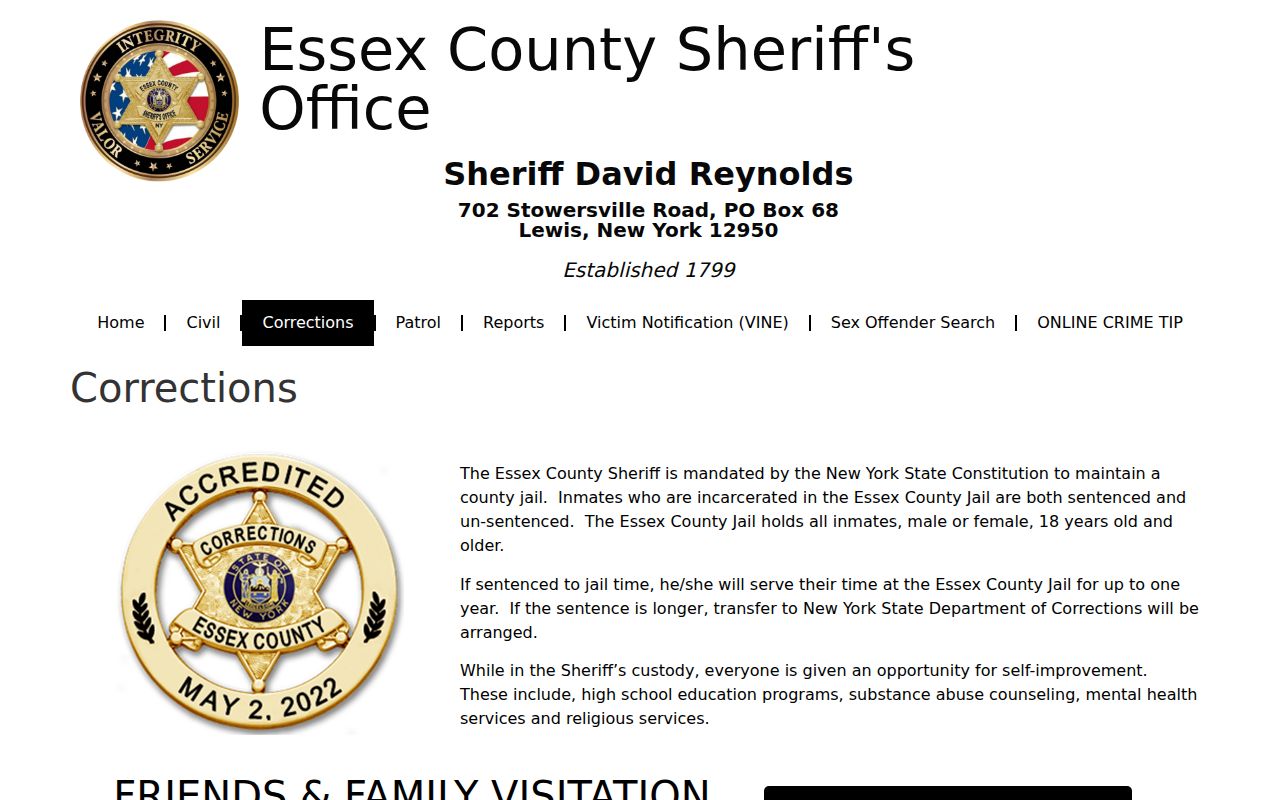
For a present-custody question, call the jail with the full name and date of birth. After state transfer, use DOCCS instead.
Essex County FOIL Route
Formal county requests go in writing to the Essex County Attorney, rather than to a generic records portal. Send them by email to foil@essexcountyny.gov, by fax to (518) 873-3894, or by mail to 7551 Court Street, PO Box 217, Elizabethtown, NY 12932. Describe the exact record, date, location, involved name, and incident number when known. Ask for electronic delivery and all reasonably segregable nonexempt portions.
The county FOIL instructions identify the submission and appeal route.
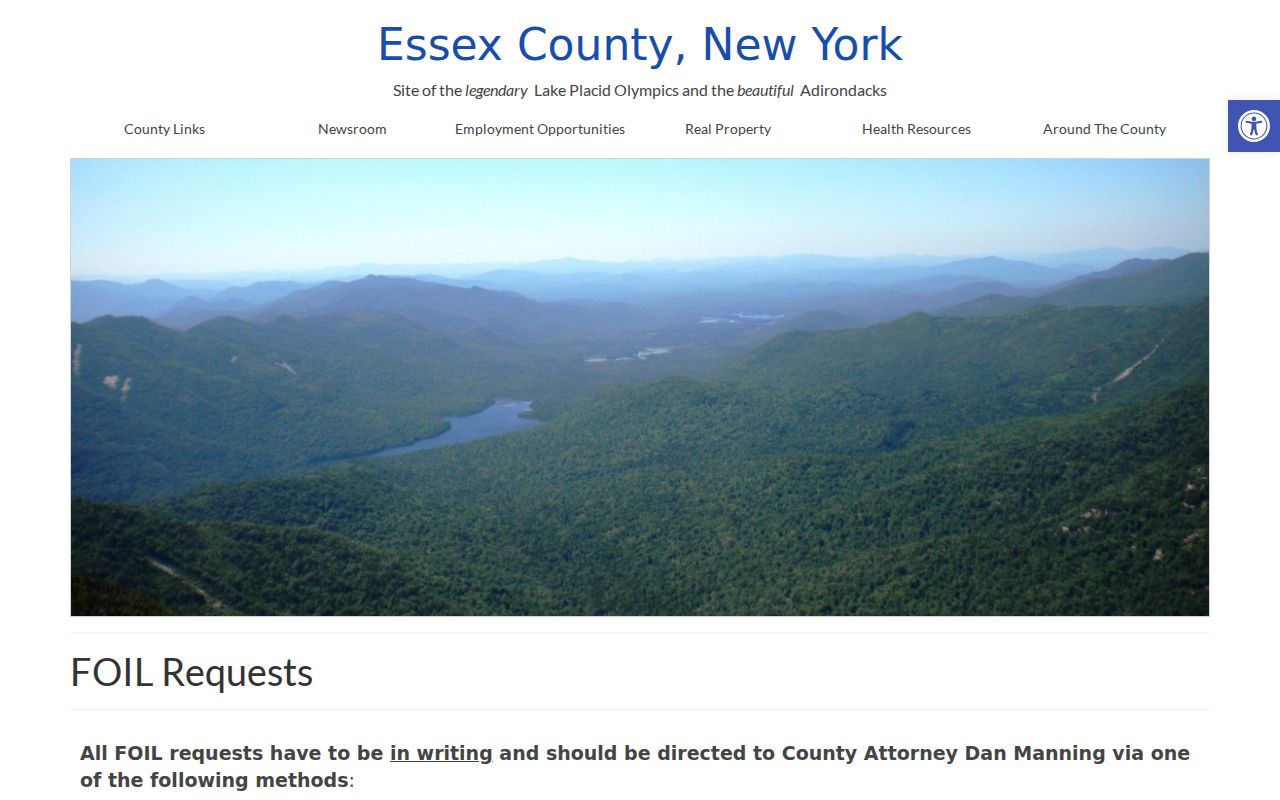
New York FOIL calls for a grant, denial, or acknowledgment within five business days. Standard pages up to 9 by 14 inches may generally cost no more than $0.25 each. Court files follow Judiciary Law access through the clerk, not county FOIL.
| Channel | Use | Timing or charge |
|---|---|---|
| Sheriff inquiry | Identify custodian for sheriff or jail material | Unpublished, ask first |
| County FOIL email or fax | Written county-agency request | Initial response within five business days |
| Court clerk | Dockets, copies, certificates | Ask the originating court |
Essex County Records: What They Contain
A DCJS record is organized around identity and fingerprint-supported cycles. A public court report is thinner and uses a name and date of birth. A booking file focuses on intake and custody. Read the heading and custodian before relying on any field. The label tells you whether a charge is an allegation, a filed offense, or a final disposition.
| Name and identifiers | Names, aliases, birth data, and state or FBI identifiers where authorized. |
|---|---|
| Arrest and booking | Agency, dates, incident or booking number, alleged charges, bail, release, or transfer. |
| Court case | Court, docket, filed charges, appearances, motions, plea, verdict, and disposition. |
| Sentence | Custody, probation, fine, surcharge, restitution, and other ordered terms. |
| Visibility limits | Sealing markers and redactions for victims, minors, and protected identifiers. |
Do not merge two people because their names match. For your own record, fingerprints and NYSID can resolve identity. For a public court file, use the docket and a certified disposition.
No Single Essex Record Search
CHRS can miss a matter because the spelling or birth date differs, the case is sealed, the local disposition was not transmitted, or the event falls within a known Town and Village Court data gap. It also excludes noncriminal violations, Family Court transfers, pardoned matters, and certain older sole misdemeanor convictions under current policy. A stale case with no reported disposition may disappear after five years without activity unless an open warrant exists.
DCJS Personal Record Review offers the stronger identity match for one's own history. The official DCJS review page explains the suppressed and unsuppressed choices.
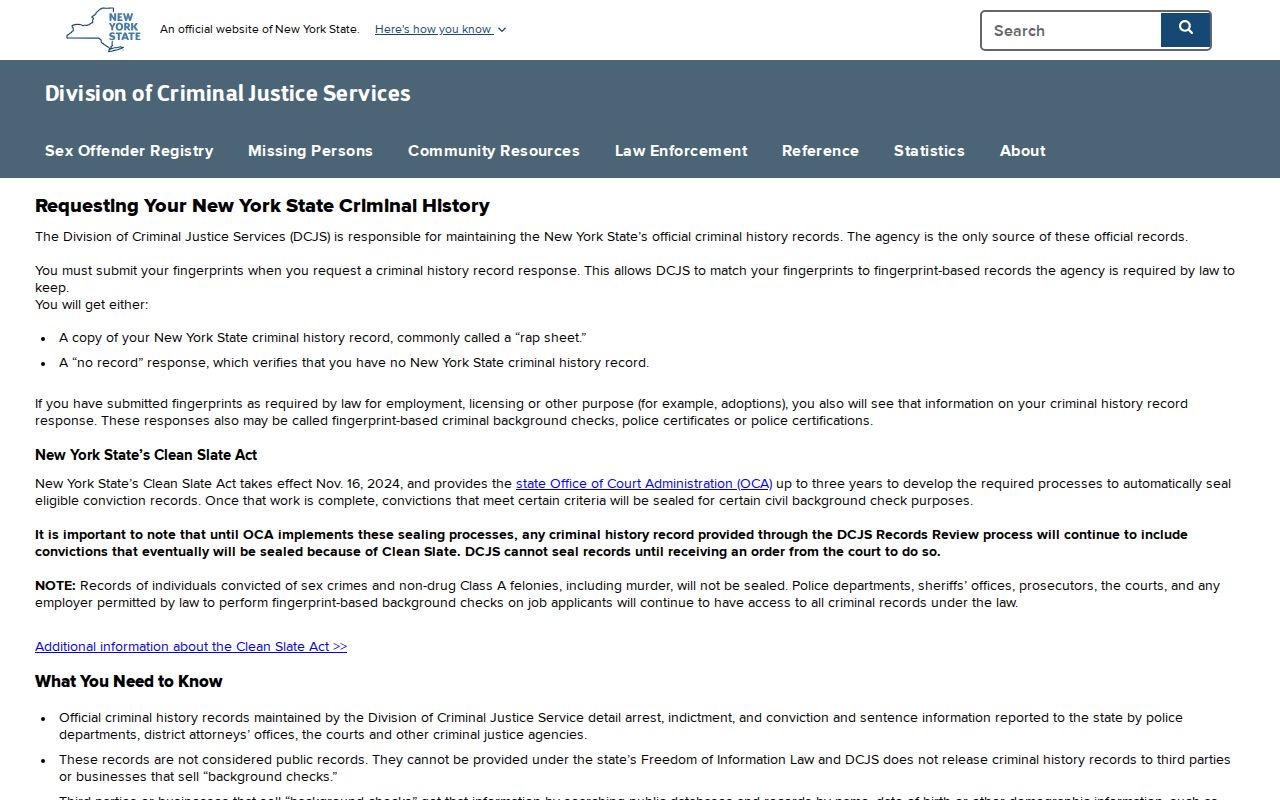
When sources disagree, go back to the custodian of the disputed fact. The police agency owns its narrative, the jail owns custody dates, and the court owns the final outcome.
New York Public Access Laws
New York uses different access rules for agency files, court records, central criminal history, sealed cases, and registry information. Public access does not remove privacy limits. Active-investigation details, confidential sources, juvenile files, sealed matters, medical information, protected victim data, and material that would interfere with enforcement can be withheld or redacted.
Key laws: Public Officers Law Article 6 governs FOIL; Judiciary Law §255 requires diligent court-file searches and certification; Executive Law §837 assigns DCJS collection and dissemination duties; CPL 160.50 governs favorable-termination sealing; CPL 160.57 creates Clean Slate sealing; and Correction Law Article 6-C governs the sex offender registry.
A narrow request is often faster and easier to review. If an office denies access, ask for the cited exemption, all segregable portions, and the written appeal route.
Essex Criminal Justice Programs
Essex County Probation runs a Pretrial Services Program that began in 1992 and a Community Service Program. Pretrial Services monitors people when a court authorizes or requests it and makes service referrals. Community Service selects work sites, tracks compliance, and reports to courts for sentences that may include an adjournment in contemplation of dismissal, conditional discharge, or probation.
The DCJS Essex program listing documents those county programs.
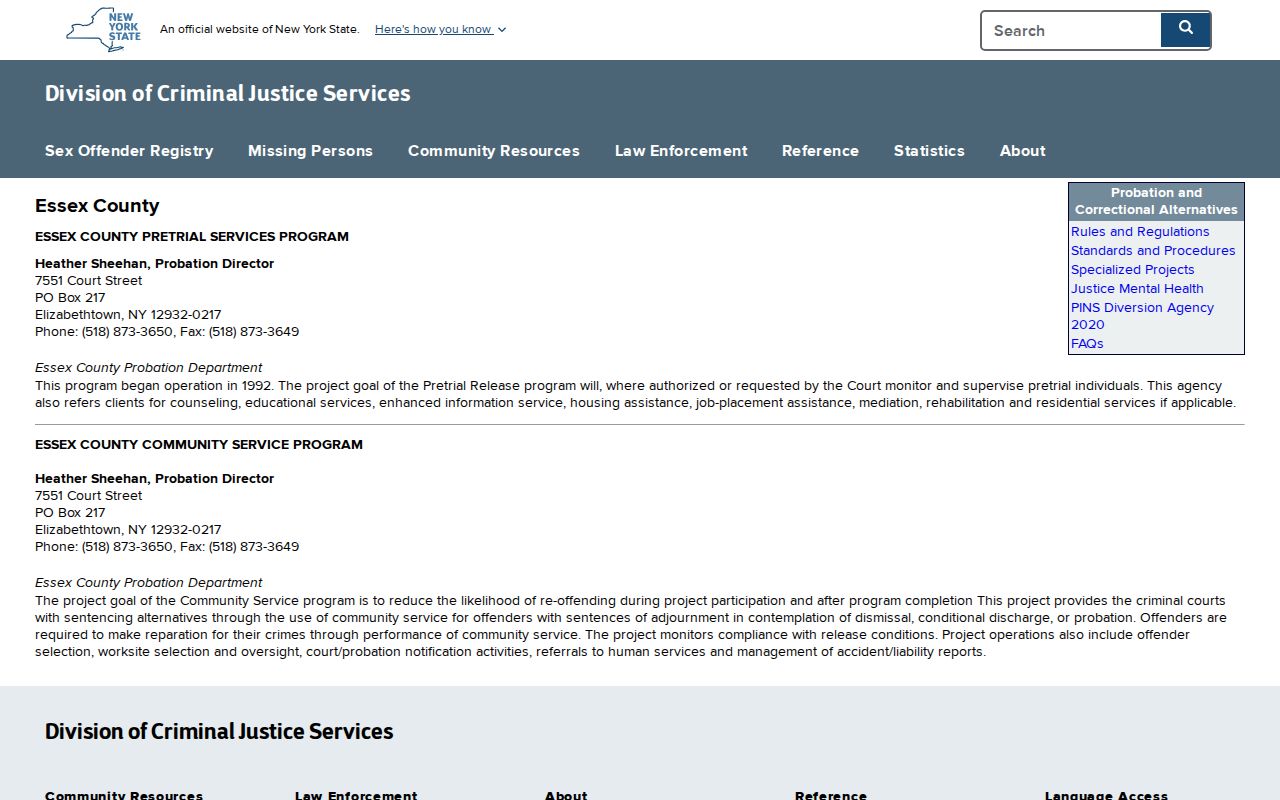
Probation is county-run, while parole and community supervision are state-run through DOCCS. A court certificate is the best public proof of a probation sentence. The DOCCS parolee lookup may show public state-supervision status, but internal notes and treatment details remain restricted.
Restricted, Sealed & Expunged Records
New York generally uses record sealing, not destruction. CPL 160.50 covers many cases that ended in the accused's favor. CPL 160.59 permits an application for up to two eligible convictions, with no more than one felony, after the required ten-year period and subject to exclusions. Clean Slate under CPL 160.57 became effective on November 16, 2024, with a three-year implementation window for OCA.
Eligible misdemeanors may seal three years after release from incarceration or sentence, while eligible felonies may seal after eight years. Pending charges, current supervision, new convictions, sex offenses, and non-drug Class A felonies affect eligibility or timing. Even a sealed record remains available for specified legal and criminal-justice purposes.
For an Essex County case, first obtain the certificate from the originating court. Confirm that the sealing order was transmitted, then request a fresh DCJS review. If a public source still shows the case, send the order and certificate to the source custodian. Clean Slate is automatic in law, but statewide implementation means a date calculation alone does not prove the record has been updated.
Essex Charges and Court Routing
The Essex County District Attorney handles proceedings in Supreme and County Court and twenty local Justice Courts. Police charges are still allegations. The prosecutor may file different counts, and a grand-jury indictment can move a felony from the local court to Elizabethtown. The public record should be followed through that transition rather than frozen at the booking stage.
The District Attorney's official page identifies the office and its Traffic Diversion process.
Traffic Diversion requires a timely not-guilty response and the original ticket sent to the court after a copy is kept. The DA does not act as a public-record search service. Defense help comes through the Public Defender or the separate Assigned Counsel Office.
The county's Assigned Counsel page explains its role in eligible cases.
Assigned Counsel provides representation in qualifying matters, not public criminal-history reports.
Essex Arrest and Jail Records
The sheriff's office dates its local history to 1799, but its current site does not publish a name-based inmate roster or warrant search. For current jail status, call (518) 873-6970 with the person's full name and date of birth. For a sheriff-created report or booking sheet, first ask which custodian handles the item, then use a focused county FOIL request if a formal written route is needed.
The Essex County Sheriff site is the official starting point.
The jail houses sentenced and unsentenced adult men and women. A county sentence of up to one year may be served there. Longer prison terms lead to DOCCS, so a person who is no longer in Lewis may appear in the state incarcerated lookup instead.
Record flow: Police report › Lewis booking, when detained › local arraignment › filed charges › Elizabethtown felony case, when indicted › disposition › DCJS update.
City-by-City Criminal Records in Essex County
Essex County has no incorporated place legally called a city. These community guides cover the three largest familiar population centers identified in the research: the Town of Ticonderoga and the Villages of Saranac Lake and Lake Placid. Their populations use different municipal units, and Saranac Lake crosses the Essex and Franklin county line. Each guide therefore begins with the local police and court route rather than implying one county-wide city system.
Saranac Lake Record Check
Village-wide 2020 population 4,887. Confirm which county holds the incident and court file.
Ticonderoga Record Check
Town 2020 population 5,042. Police releases are selective and Town Court keeps local cases.
Lake Placid Record Check
Village 2020 population 2,205. Police and court share an address but keep distinct records.
Those figures provide context, not a strict city ranking. A town and village are different census universes, and Saranac Lake's total spans two counties.